Buying a Loft in New York City
What to look for, what to protect, and what most buyers get wrong about one of the most distinctive property types in Manhattan and Brooklyn.
A loft is not a floor plan. It's a specific kind of space with a specific kind of history — and buying one well means understanding the difference between what the building was, what it became, and what's worth keeping. In New York, that distinction matters more than almost anywhere else, because the lofts here aren't generic. They're former factories, printing houses, textile warehouses, tobacco buildings. The character embedded in those walls is either preserved, compromised, or gone entirely. Which one you're looking at changes everything about the value.
What to look for
Original character is the asset. Know what it looks like.
The things that make a loft worth buying are almost always the things that can't be reproduced — and that are surprisingly easy to destroy in a renovation. When you're walking a space, you're not just evaluating the layout. You're evaluating what's been kept, what's been covered, and what's been lost.
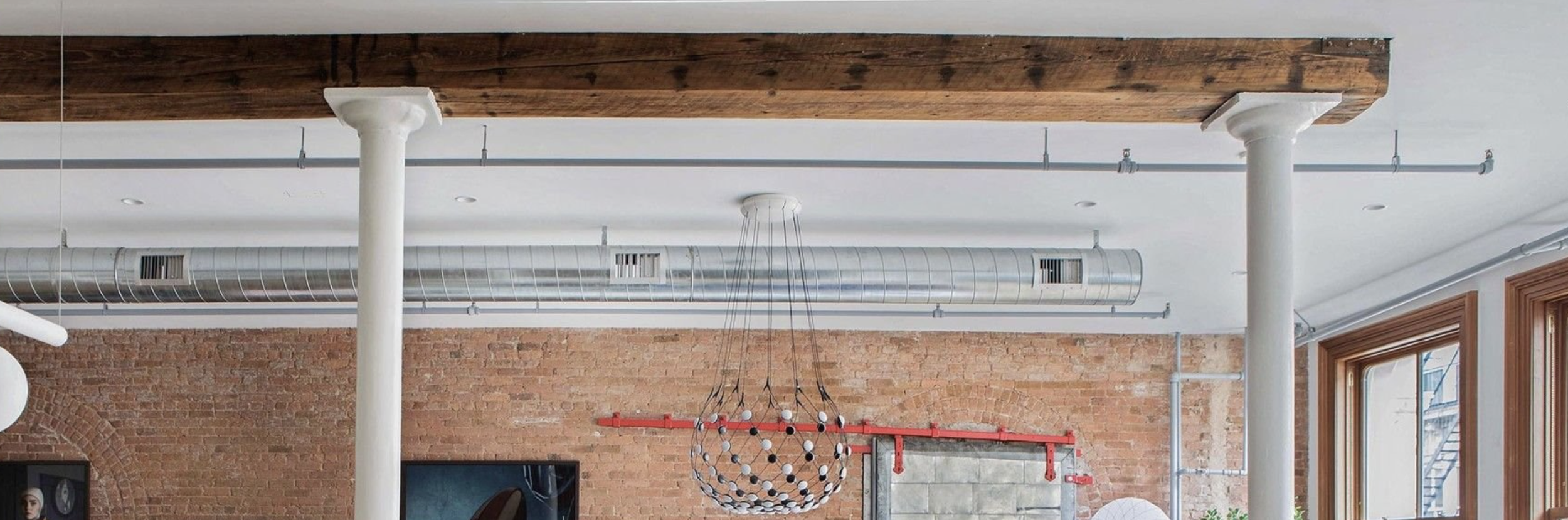
Columns and beams — Cast-iron columns in SoHo buildings, heavy timber posts and beams in warehouse conversions. These are structural and decorative at once. Original columns often have decorative capitals — the ornamental detail at the top — that were cast as part of the original manufacturing process. They can't be reproduced cheaply or convincingly.
Original hardwood floors — Wide-plank heart pine or Douglas fir, laid over a century ago, worn to a specific patina that no new floor can replicate. Look at the grain, the knots, the color variation. A floor that's been sanded too many times loses its character. One that's been covered in tile or carpet may still be salvageable underneath.
Windows — Steel-frame industrial windows are among the most distinctive features in New York loft buildings. Look for the original frames — often painted over multiple times but structurally intact. Older glass, particularly in pre-war buildings, sometimes has a slight wave or ripple to it — a visual artifact of the manufacturing process called cylinder glass or antique glass — that catches light differently than any modern replacement. If those windows have been swapped for contemporary aluminum units, something irreplaceable is gone.
Hardware and architectural details — Original mortise locksets, cast-iron door hinges, transom windows above interior doors, exposed brick with original mortar, tin ceilings, and the small details that accumulate into a coherent material environment. These are called architectural hardware and period millwork — and their presence or absence tells you immediately whether a renovation was done with care or without it.
Exposed brick and plaster — Original brick walls, when intact, add thermal mass and visual texture that drywall simply doesn't. Plaster walls in pre-war buildings have a density and finish that's different from modern construction. Both are worth preserving and worth noting when they haven't been.
The neighborhoods
Where lofts are, and what kind.
Not all New York lofts are the same. The neighborhood determines the building type, the history, and the architectural character you're working with.
SoHo — The original New York loft market. Cast-iron facades, wide-plank hardwood floors, exposed timber beams, massive north-facing windows. These buildings were purpose-built for manufacturing in the mid-1800s and converted to artist live-work spaces starting in the 1970s under the city's Artist in Residence program. The floor plates are enormous, the ceiling heights generous, and the details — original columns, industrial hardware, freight elevator lobbies — are irreplaceable. SoHo lofts are among the most sought-after residential spaces in the country for a reason.
Tribeca — Similar bones to SoHo but a different texture. More warehouse than factory, heavier masonry, deeper floor plates. Tribeca lofts tend toward the refined end — many have been renovated with real investment — but the best ones still carry their industrial origin. The loading dock details, the oversized window bays, the raw concrete or brick that shows through in the right places.
Flatiron and Chelsea — More varied than SoHo or Tribeca. A mix of early 20th century commercial buildings and converted loft structures that lean industrial — exposed ductwork, concrete columns, steel windows. The Flatiron District in particular has a concentration of early 1900s office-to-residential conversions that offer genuine architectural interest at a range of price points.
Williamsburg and Greenpoint, Brooklyn — The industrial loft tradition continues across the river, with a rougher edge. Williamsburg conversions tend to be former factory and warehouse buildings — concrete floors, high ceilings, steel-frame windows, exposed brick. Less polished than SoHo, often more raw, and for the right buyer that's the point. Greenpoint offers a quieter version of the same, with more intact pre-war manufacturing buildings still being converted.
DUMBO — Cobblestone streets, massive former warehouse buildings, and some of the most dramatic loft spaces in Brooklyn. DUMBO lofts are characterized by their scale — deep floor plates, double-height ceilings in some units, steel and timber construction. The neighborhood's proximity to the bridges gives many of these spaces a light quality that's hard to replicate.
Renovated with taste is different from renovated.
The worst thing that can happen to a loft is a renovation that mistakes newness for improvement. A gut renovation that strips the floors, covers the brick, drops the ceilings to accommodate recessed lighting, and replaces the steel windows with something more "energy efficient" hasn't improved the space. It's destroyed what made it worth buying in the first place.
The best renovated lofts are the ones where the work is invisible in the right ways — modern systems, updated kitchen and bath, proper insulation, but the original architecture is treated as the fixed point everything else is organized around. The columns stay. The floors stay. The windows stay. The renovation serves the space rather than replacing it.
A gut loft — raw, unfinished, with the original bones fully intact — is often more valuable than a heavily renovated one, if you have the vision and the budget to do it right.
A true gut loft offers something rare: the chance to make decisions that won't be made for you. The tradeoff is carrying costs during renovation, the complexity of working within a pre-war building's structural and regulatory constraints, and the need for a team — architect, contractor, expediter, who understand what they're working with.
Loft buildings carry costs that newer buildings don't.
Pre-war loft buildings are beautiful precisely because they weren't built to be apartments. That history comes with financial implications that buyers need to understand before they're in contract.
Common charges in loft co-ops and condos tend to run higher than in newer buildings — not because of amenities, but because the buildings are old. A cast-iron facade requires periodic inspection and repair. Roofs need replacement. Boilers age. Elevators — often the original freight lifts — need servicing and eventual overhaul. Window restoration, pointing, Local Law 11 facade work — these expenses are real and recurring, and they land on the residents through assessments or elevated maintenance.
Before buying in any pre-war loft building, the financials need to be examined carefully:
Reserve fund levels — Is there adequate capital set aside for major capital expenditures, or has the building been running lean?
Pending assessments — Is facade work, roof replacement, or elevator modernization already planned and funded, or is it coming?
Underlying mortgage — In co-ops, the building's own mortgage affects your effective carrying costs and limits how much you can finance your purchase.
Board financial statements — Three years of audited financials tell you how the building has been managed. A well-run building with healthy reserves is worth a premium. A building with thin reserves and deferred maintenance is a liability dressed as an asset.
None of this makes loft buildings bad investments. The best ones — well-managed, financially sound, architecturally intact — tend to hold value and attract buyers who care deeply about what they're buying. But the diligence required is real, and skipping it is how buyers end up in buildings that assess them for $50,000 two years after closing.
Buying a loft is not like buying a conventional apartment.
The evaluation is more layered. The due diligence touches things that don't come up in a standard condo purchase — building history, conversion documents, certificate of occupancy details, artist certification requirements in some SoHo buildings, zoning classifications that affect how the space can be used. The board process, if it's a co-op, adds another layer of scrutiny on top of that.
The buyers who navigate this well are the ones who go in understanding what they're looking at — not just the space itself, but the building around it, the block it's on, and the financial and regulatory history that comes with it. That's the work that happens before an offer, and it's what determines whether the apartment you fall in love with is actually worth buying.
AKN specializes in lofts, pre-war apartments, and architecturally distinctive properties in downtown Manhattan and Brooklyn. If you're looking for a loft and want to work with someone who understands what makes them worth buying — and what doesn't — reach out directly.